When making an attempt to be creative, the advice we are often given is to look to others for inspiration. When writing poetry, you are given collections. When creating physical art, you are given galleries. When writing novels, you are given similar ones in your genera. When crafting, you are given Pinterest.
These are all amazing inspirations, I don’t want it to seem like I don’t think that way. But, in this article from the original muse, we are told to find inspiration that is different. Kruger says, “Find an artist you admire. Someone whose art is different than yours.” (I STRONGLY suggest going and reading Kruger’s example of his inspiration in the exercise, Sir Ian McKellen, and the way that acting compares to writing).
Then, going even a step further, he suggests not only viewing their art as inspiration, but also listening to what they have to say about their art.
My immediate thought was to look at music. I have always had such a connection to music. I can physically feel a change in my heart when I hear music that moves it, inspires it, or affects it in any way. I actually think that music was probably my first inspiration to get me to start writing poetry. Music is poetry in a lot of ways, so it’s a safe place for me to pull inspiration from.
I found Jack Rutter’s music (stage name Ritt Momney) in high school. It was a friend of a friend’s suggestion. I remember listening to his music for the first time and feeling that physical emotion. Back then, I don’t think I was even listening to the words very closely. I just enjoyed it for what it was before actually attempting to dive in and understand it.
As the years passed, I understood more. In an interview with Rutter, he said, “Whatever the case may be, the idea of helping people through music made me feel like I’d done something great in the process.” This is an idea that can find its value through many forms of art. The idea of connection. The idea of not feeling as alone as we can often feel. This is something I felt in his music without even realizing it.
But, I realized, as I researched more about Rutter and his music, on top of the fact that his music is amazing, it has really appealed to me over the years because of the vulnerability. I would not be able to relate to it as much as I do if he wasn’t vulnerable in ways that I fear to be.
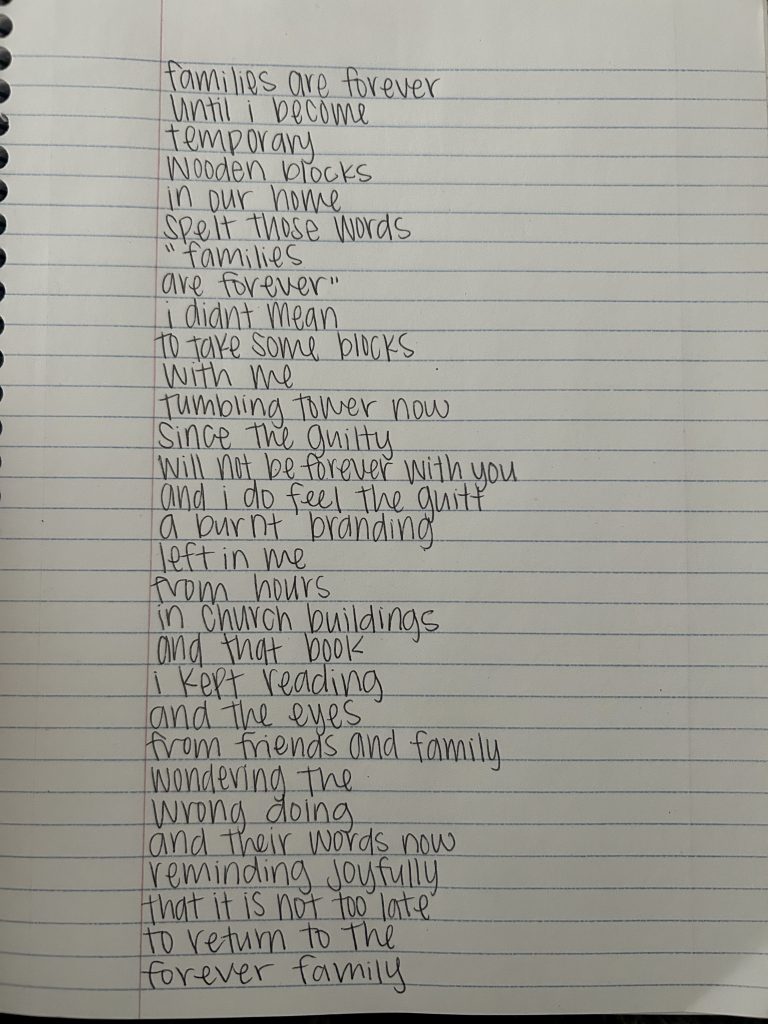
A good chunk of his music has an underlying theme of what it is like growing up in Utah and growing up Mormon. This is a topic that is very close to home for me. It’s something that I write about often, but am extremely hesitant to share because I am scared of what people close to me will think.
In poetry, I have this concealed knowledge that I can get away with being vague. I can address feelings and experiences through metaphors and hazy anecdotes and as long as it sounds poetic, then it is a poem. I fear that I may, at least sometimes, need to allow myself to go deeper and share those deeper moments for the opportunity of vulnerability and connection.

In the same article, Rutter is asked what sound he is most proud of. He mentions my favorite song of his, “(If) the Book Doesn’t Sell”. I saw Ritt Momney in concert last year and loved every moment, including the anxiety I felt the whole way through hoping this song would be played. I remember being convinced, as the end of the concert came near, that it somehow didn’t make the setlist. Then, after he announced the very last song, it started. And as I listened to it, with tears streaming down my face, I actually listened closely to the lyrics, understanding why this song meant so much to me. I understood why I felt the need to hear it that night.
It is my favorite because it encapsulates a lot of my fears, thoughts, and feelings I have of growing up in and leaving a religion that I was so surrounded by. It always makes me feel less alone, knowing I am not the only one that has felt this way. This is exactly why Rutter says it is the song he is most proud of.
What a beautiful full circle.
As I research these Punk the Muse articles from years ago, I am given an opportunity, a choice, a suggestion, to dive deeper into art that means something to me. This ends up being an opportunity, a choice, a suggestion to dive deeper into me. To dive into the pent-up guilt and fear.
I have a firm belief, even without religion, that everything happens for a reason, and I seem to find those reasons a lot while writing this column.
Somehow Kruger became a wizard (or portrayed one for a duration), and I am becoming (or portraying for a duration) the individual who talks about running away from religion.
The full advice: “How might we punk the muse this week? Find an artist you admire, someone whose art is different than yours. You’re a writer? Think of an actor or a painter or a musician. Read what that person has to say about their art. Take it in. Meditate on it. Allow yourself to be moved and see where it leads.”

Natilee Shock is writing into Charlsie-Kern Kruger’s column The Storming Bohemian Punks the Muse as a way to hold herself accountable creatively. Read the whole column here.
Slay away bae!! You killed this as per usual #confidence